


Substance misusers will use different types of injections depending on the substance used. Substances are injected because they are usually absorbed much quicker than by oral method or the chemical make-up is changed by the digestive process. There are very few substances that cannot be injected and almost every drug which comes in capsule or tablet form can be injected. The drug is dissolved in water and heated before the solution is drawn into a small syringe, sometimes through a “filter” made up of cotton wool or a cigarette filter, for example. Cannabis is one of the very few substances that cannot be injected.
There are four main considerations when discussing injections: the route of injection, the site of injection, the technique used and the equipment.
Route of injections:
Subcutaneous (SC) route - often referred to by users of recreational substances as “skin popping”, the subcutaneous route is used for a slow, continuous absorption of a substance. The main substances that users inject subcutaneously are the higher-potency prescription opiates, such as morphine, fentanyl or cocaine.
Correct technique: It is important to wipe the intended injection site with an alcohol swab to minimise the risk of developing an abscess or infection. Subcutaneous injections can be administered either at a 45° or 90° angle; the skin is pinched to lift up the fatty tissue away from the underlying muscle with the most common sites being the thighs, abdomen, buttocks or upper arms. The user should remove the needle, ensure that the needle and syringe are placed in a safe position and a gauze should be placed over the injection site.
Intramuscular (IM) route - delivers a substance into muscle with good blood supply providing a rapid systemic action and absorbing relatively large doses.
Correct technique: It is important to wipe the intended injection site with an alcohol swab to minimise the risk of developing an abscess or infection. Common sites for self-administered IM injections are the muscles of the thighs, the muscles around the hip joint and the muscles of the buttocks. The needle should be long enough to reach the muscle and inserted into the skin at a 90° angle. Following injecting, the user should remove the needle, ensure that the needle and syringe are placed in a safe position and a gauze should be placed over the injection site.
Intravenous (IV) route – this route is the preferred route for most substance misusers due to the quick absorption of the substance and consequently carries an increased risk of overdose by injecting too much of the drug into the bloodstream. Switching to this faster route of administering a substance is a sign of a developing addiction. The preferred injection sites for most users is either the median cubital vein (on the inside of the elbow) or the basilic vein (in the forearm). However, with continued injecting there is an increased risk of developing abscesses or ulceration at the injection site and the user will therefore move on to other sites to inject, such as the large femoral vein in the groin or the smaller veins in the fingers, toes or even the genitals.
Correct technique: It is important to wipe the intended injection site with an alcohol swab to minimise the risk of developing an abscess or infection. The user should tie a tourniquet just above the site of the intended injection and palpate a vein. The needle should be inserted into the vein at a 45° angle in the direction of blood flow. Aspirating to check the position of the needle in the vein is recommended before removing the tourniquet and injecting. The user should remove the needle, ensure that the needle and syringe are placed in a safe position and a gauze should be placed over the injection site.
Appropriate equipment needed:
Bydd unigolion sy'n camddefnyddio sylweddau yn defnyddio gwahanol fathau o bigiadau gan ddibynnu ar y sylwedd a ddefnyddir. Caiff sylweddau eu chwistrellu gan eu bod fel arfer yn cael eu hamsugno'n llawer cyflymach drwy wneud hynny na thrwy eu cymryd drwy'r geg neu gan fod y cyfansoddiad cemegol yn newid yn ystod y broses dreulio. Prin iawn yw'r sylweddau na ellir eu chwistrellu a gellir chwistrellu fwy neu lai pob cyffur a ddaw ar ffurf capsiwl neu dabled. Caiff y cyffur ei hydoddi mewn dŵr a'i wresogi cyn tynnu'r hydoddiant i mewn i chwistrell fach, weithiau drwy "hidlydd" wedi'i greu o wlân cotwm neu hidlydd sigarét, er enghraifft. Mae canabis ymhlith y sylweddau prin na ellir ei chwistrellu.
Mae pedwar prif ystyriaeth wrth drafod pigiadau: ffyrdd o chwistrellu, safle'r chwistrelliad, y dechneg a ddefnyddir a'r cyfarpar.
Ffyrdd o chwistrellu:
Drwy'r croen ("subcutaneous" yn Saesneg) - cyfeirir ato'n aml gan ddefnyddwyr sylweddau hamdden fel "popio'r croen". Defnyddir y dull hwn drwy'r croen er mwyn amsugno sylwedd yn araf ac yn barhaus. Y prif sylweddau a gaiff eu chwistrellu drwy'r croen gan ddefnyddwyr yw'r opiadau cryfach a geir ar bresgripsiwn, megis morffin, fentanyl neu gocên.
Y dechneg gywir: Mae'n bwysig sychu'r man y bwriedir chwistrellu iddo gan ddefnyddio swab alcohol er mwyn lleihau'r risg y bydd crawniad neu haint yn datblygu. Gellir chwistrellu drwy'r croen naill ai ar ongl o 45° neu 90°; caiff y croen ei binsio er mwyn codi'r meinwe brasterog o'r cyhyr oddi tano. Y mannau mwyaf cyffredin a ddefnyddir yw'r forddwyd, yr abdomen, y pen-ôl neu ran uchaf y fraich. Dylai'r defnyddiwr dynnu'r nodwydd, sicrhau bod y nodwydd a'r chwistrell wedi'u gosod mewn man diogel a dylid gosod rhwyllen ("gauze" yn Saesneg) dros y rhan o'r corff a ddefnyddiwyd.
Drwy gyhyr - yn cyflwyno sylwedd i mewn i gyhyr â chyflenwad gwaed da, gan gyrraedd y system yn gyflym ac amsugno dognau cymharol fawr.
Y dechneg gywir: Mae'n bwysig sychu'r man y bwriedir chwistrellu iddo gan ddefnyddio swab alcohol er mwyn lleihau'r risg y bydd crawniad neu haint yn datblygu. Ymhlith y mannau cyffredin a ddefnyddir wrth chwistrellu drwy gyhyr mae'r forddwyd, y cyhyrau o amgylch cymal y glun a chyhyrau'r pen-ôl. Dylai'r nodwydd fod yn ddigon hir i gyrraedd y cyhyr a dylid ei osod i mewn i'r croen ar ongl o 90°. Ar ôl chwistrellu, dylai'r defnyddiwr dynnu'r nodwydd, sicrhau bod y nodwydd a'r chwistrell wedi'u gosod mewn man diogel a dylid gosod rhwyllen dros y rhan o'r corff a ddefnyddiwyd.
Drwy wythïen – dyma'r dull a ffefrir gan y rhan fwyaf o unigolion sy'n camddefnyddio sylweddau gan fod y sylwedd yn cael ei amsugno'n gyflym. O ganlyniad, ceir risg uwch o ddos gormodol drwy chwistrellu gormod o'r cyffur i mewn i lif y gwaed. Mae newid i'r ffordd gyflymach hon o gymryd sylwedd yn arwydd bod yr unigolyn yn datblygu dibyniaeth. Y man chwistrellu a ffefrir gan y rhan fwyaf o ddefnyddwyr yw naill ai'r wythïen elinol ganol (ar du mewn y penelin) neu'r wythïen fasilig (ym mlaen y fraich). Fodd bynnag, wrth barhau i chwistrellu'n rheolaidd, ceir risg uwch y bydd crawniadau neu glwyfau yn datblygu yn y man chwistrellu ac felly, bydd y defnyddiwr yn symud i ddefnyddio mannau chwistrellu eraill, fel gwythïen fawr y forddwyd yng nghesail y forddwyd neu'r gwythiennau llai o faint yn y bysedd, bysedd y traed neu hyd yn oed yr organau cenhedlu.
Y dechneg gywir: Mae'n bwysig sychu'r man y bwriedir chwistrellu iddo gan ddefnyddio swab alcohol er mwyn lleihau'r risg y bydd crawniad neu haint yn datblygu. Dylai'r defnyddiwr ddefnyddio rhwymyn tynhau yn union uwchben y man y bwriedir chwistrellu iddo a theimlo am wythïen. Dylid gosod y nodwydd i mewn i'r wythïen ar ongl o 45° i gyfeiriad llif y gwaed. Argymhellir y dylid allsugno er mwyn cadarnhau bod y nodwydd yn y man cywir yn y wythïen cyn tynnu'r rhwymyn tynhau a chwistrellu. Dylai'r defnyddiwr dynnu'r nodwydd, sicrhau bod y nodwydd a'r chwistrell wedi'u gosod mewn man diogel a dylid gosod rhwyllen dros y rhan o'r corff a ddefnyddiwyd.
Y cyfarpar priodol sydd ei angen:
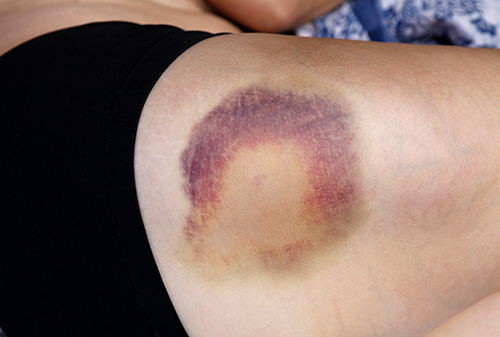
The risk of blood borne viruses (such as hepatitis B, hepatitis C and HIV) being transmitted is high when using shared and non-sterile injection apparatus, such as spoons, needles, syringes, filters and tourniquets.
Hepatitis B is a liver disease caused by being infected by the Hepatitis B virus through contact with infected blood and body fluids. Most people infected with hepatitis B will not be aware of any symptoms; if symptoms do develop it is usually two or three months following exposure to the virus. Flu-like symptoms (tiredness, fever and aches and pains) are generally the first signs of infection followed by loss of appetite, diarrhoea, abdominal discomfort, sickness and jaundice. Most symptoms will pass within three months (in acute hepatitis B) and the individual will fully recover. Chronic hepatitis B (symptoms lasting six months or more) will affect 90% of babies infected, 20% of older children infected and 5% of infected adults. Although treating the symptoms caused by the virus will help, there is a risk that people with chronic hepatitis B could develop liver cirrhosis or liver cancer. A vaccine that offers protection against hepatitis B is available for people at high risk of contracting the infection, such as substance misusers or their partners/family.
Hepatitis C is a liver disease caused by being infected by the Hepatitis C virus through contact with infected blood and body fluids. If left untreated, it can cause liver cirrhosis, liver failure or liver cancer. Symptoms of hepatitis C are not noticeable until the liver has been significantly damaged. Flu-like symptoms (tiredness, fever and aches and pains) are generally the first signs of infection followed by loss of appetite, abdominal discomfort and sickness although they are often mistaken for other conditions in the early stages of infection. It is estimated that half of people who inject substances in the UK have the hepatitis C infection. With advances in medication, 90% of people infected with hepatitis C may be cured before significant damage to the liver may be caused although if the infection is left untreated for many years, it is likely that the liver will stop working properly.
HIV (human immunodeficiency virus) is caused by being infected by the HIV virus through contact with infected blood and body fluids. There is currently no cure for HIV, although with early diagnosis there are effective drug regimens available that enable people to live a long life. First symptoms (flu-like symptoms lasting for a week or two) will be evident two to six weeks after the infection with the virus. After this, the HIV virus may not cause any symptoms for many years, however the virus will continue to damage the immune system. A combination of antiretroviral medications will prevent the virus from replicating in the body which will allow the immune system to repair itself preventing further damage.
Mae'r risg y caiff feirysau a gludir yn y gwaed (fel hepatitis B, hepatitis C a HIV) eu trosglwyddo yn uchel wrth ddefnyddio cyfarpar chwistrellu a rennir a chyfarpar chwistrellu heintiedig megis llwyau, nodwyddau, chwistrellau, hidlyddion a rhwymynnau tynhau.
Afiechyd yn yr afu yw hepatitis B a achosir drwy gael eich heintio â feirws hepatitis B drwy gysylltiad â gwaed a hylifau corff heintiedig. Ni fydd y rhan fwyaf o bobl â haint hepatitis B yn ymwybodol o unrhyw symptomau; os bydd symptomau yn datblygu, byddant fel arfer yn gwneud hynny ymhen dau neu dri mis o ddod i gysylltiad â'r feirws. Yn gyffredinol, symptomau tebyg i'r ffliw (blinder, twymyn a phoenau) yw'r arwyddion cyntaf o haint, wedi'u dilyn gan golli awydd am fwyd, dolur rhydd, anesmwythder yn yr abdomen, cyfog a'r clefyd melyn. Bydd y rhan fwyaf o symptomau yn darfod o fewn tri mis (mewn achosion acíwt o hepatitis B) a bydd yr unigolyn yn gwella'n llwyr. Bydd hepatitis B cronig (symptomau sy'n para chwe mis neu fwy) yn effeithio ar 90% o fabanod a gaiff eu heintio, 20% o blant hŷn a gaiff eu heintio a 5% o oedolion a gaiff eu heintio. Er y bydd trin y symptomau a achosir gan y feirws yn helpu, mae risg y gallai pobl â hepatitis B cronig ddatblygu sirosis yr afu neu ganser yr afu. Mae brechlyn sy'n cynnig diogelwch yn erbyn hepatitis B ar gael i bobl y mae risg uchel y byddant yn dal yr haint, fel unigolion sy'n camddefnyddio sylweddau neu eu partneriaid/teulu.
Afiechyd yn yr afu yw hepatitis C a achosir drwy gael eich heintio â feirws hepatitis C drwy gysylltiad â gwaed a hylifau corff heintiedig. Os na chaiff ei drin, gall achosi sirosis yr afu, methiant yr afu neu ganser yr afu. Nid yw symptomau hepatitis C yn amlwg hyd nes y bydd niwed sylweddol i'r afu. Yn gyffredinol, symptomau tebyg i'r ffliw (blinder, twymyn a phoenau) yw'r arwyddion cyntaf o haint, wedi'u dilyn gan golli awydd am fwyd, anesmwythder yn yr abdomen a chyfog, er y cânt yn aml eu camgymryd am gyflyrau eraill yn ystod camau cynnar yr haint. Amcangyfrifir bod gan hanner y bobl sy'n chwistrellu sylweddau yn y DU haint hepatitis C. O ystyried datblygiadau meddygol, mae'n bosibl y caiff 90% o bobl a gaiff eu heintio â hepatitis C eu gwella cyn iddynt ddioddef unrhyw niwed sylweddol i'r afu, er ei bod yn debygol y bydd yr afu yn methu'n llwyr os na chaiff yr haint ei drin am flynyddoedd.
Caiff HIV (feirws diffyg imiwnedd dynol) ei achosi drwy gael eich heintio â feirws HIV drwy gysylltiad â gwaed a hylifau corff heintiedig. Ar hyn o bryd, nid oes modd gwella o HIV, er bod cyffuriau effeithiol ar gael y gellir eu defnyddio os ceir diagnosis cynnar sy'n galluogi pobl i fyw bywyd hir. Bydd y symptomau cyntaf (symptomau tebyg i'r ffliw sy'n para am wythnos neu ddwy) yn amlwg rhwng pythefnos a chwech wythnos ar ôl i'r unigolyn gael ei heintio â'r feirws. Ar ôl hyn, mae'n bosibl na fydd y feirws HIV yn achosi unrhyw symptomau am sawl blwyddyn, ond bydd y feirws yn parhau i achosi niwed i'r system imiwnedd. Bydd cyfuniad o feddyginiaethau gwrthretrofirol yn atal y feirws rhag dyblygu yn y corff a fydd yn caniatáu i'r system imiwnedd atgyweirio gan atal niwed pellach.
Serious injury can occur from incorrect handling of discarded needles and from spillages that may occur prior, during and following an episode of substance misuse.
Needles and syringes may be contaminated with human blood and body fluid or other infectious material. Exposure to these contaminants through the piercing of skin or contact with already broken skin may pose a health risk for transmission of infections. Here are a few guidelines to follow when handling needles:
Each organisation will have their own policies and procedures to deal with discarded spillages, however the principles will be the same for each organisation.
Gall anafiadau difrifol ddigwydd os nad ymdrinnir yn briodol â nodwyddau wedi'u gwaredu a gollyngiadau a all ddigwydd cyn achos o gamddefnyddio sylweddau, yn ystod yr achos hwnnw ac yn dilyn yr achos hwnnw.
Gall nodwyddau a chwistrellau fod wedi'u halogi â gwaed dynol a hylif y corff neu ddeunydd heintus arall. Os caiff unigolyn ei amlygu i'r halogion hyn drwy dorri'r croen neu drwy ddod i gysylltiad â chroen sydd eisoes wedi torri, mae risg y gellid trosglwyddo heintiau. Dyma ychydig o ganllawiau i'w dilyn wrth ymdrin â nodwyddau a chwistrellau:
Bydd gan bob sefydliad ei bolisïau a'i weithdrefnau ei hun ar gyfer ymdrin â gollyngiadau heb eu glanhau, ond bydd yr egwyddorion yr un fath ar gyfer pob sefydliad.

It is important that workers supporting individuals who misuse substances are aware of when it is appropriate to signpost individuals to additional support if problems arise with regard to injecting or broader associated problems. When recognising the potential injuries and blood borne viruses it may be appropriate to refer the individual to services such as:
It is also important for the worker to understand the scope of their practice and to refer on as appropriate if an issue arises with an individual that they are not qualified to deal with.
Mae'n bwysig bod gweithwyr sy'n helpu unigolion sy'n camddefnyddio sylweddau yn ymwybodol pryd y mae'n briodol atgyfeirio'r unigolion hynny at gymorth ychwanegol os bydd problemau yn codi mewn perthynas â chwistrellu neu os bydd problemau cysylltiedig ehangach. Wrth nodi anafiadau posibl a feirysau a gludir yn y gwaed, gall fod yn briodol cyfeirio'r unigolyn at wasanaethau fel:
Mae hefyd yn bwysig i'r gweithiwr ddeall cwmpas ei ymarfer ac atgyfeirio unigolion ymlaen fel y bo'n briodol os bydd mater yn codi nad yw'n gymwys i ymdrin ag ef.
It is important that all employees working for substance misuse services can work in ways that follow organisational procedures for the supply and exchange of injecting equipment in line with their role and responsibility to ensure consistency of service delivery.
Each organisation or service will have their own policies and procedures with regard to the supply and exchange of injecting equipment and all workers in the organisation should read, understand and be made aware of the organisational guidelines. It is the organisation’s responsibility during induction to ensure that workers are aware of their roles and responsibilities.
Mae'n bwysig y gall pob gweithiwr cyflogedig sy'n gweithio i wasanaethau camddefnyddio sylweddau weithio mewn ffyrdd sy'n dilyn gweithdrefnau sefydliadol ar gyfer cyflenwi a chyfnewid cyfarpar chwistrellu yn unol â'i rôl a'i gyfrifoldeb o ran sicrhau cysondeb wrth ddarparu gwasanaethau.
Bydd gan bob sefydliad neu wasanaeth ei bolisïau a'i weithdrefnau ei hun ar gyfer cyflenwi a chyfnewid cyfarpar chwistrellu a dylid sicrhau bod pob gweithiwr yn y sefydliad yn ymwybodol o ganllawiau'r sefydliad, ei fod wedi'u darllen a'i fod yn eu deall. Cyfrifoldeb y sefydliad, yn ystod y cyfnod sefydlu, yw sicrhau bod gweithwyr yn ymwybodol o'u rolau a'u cyfrifoldebau.